


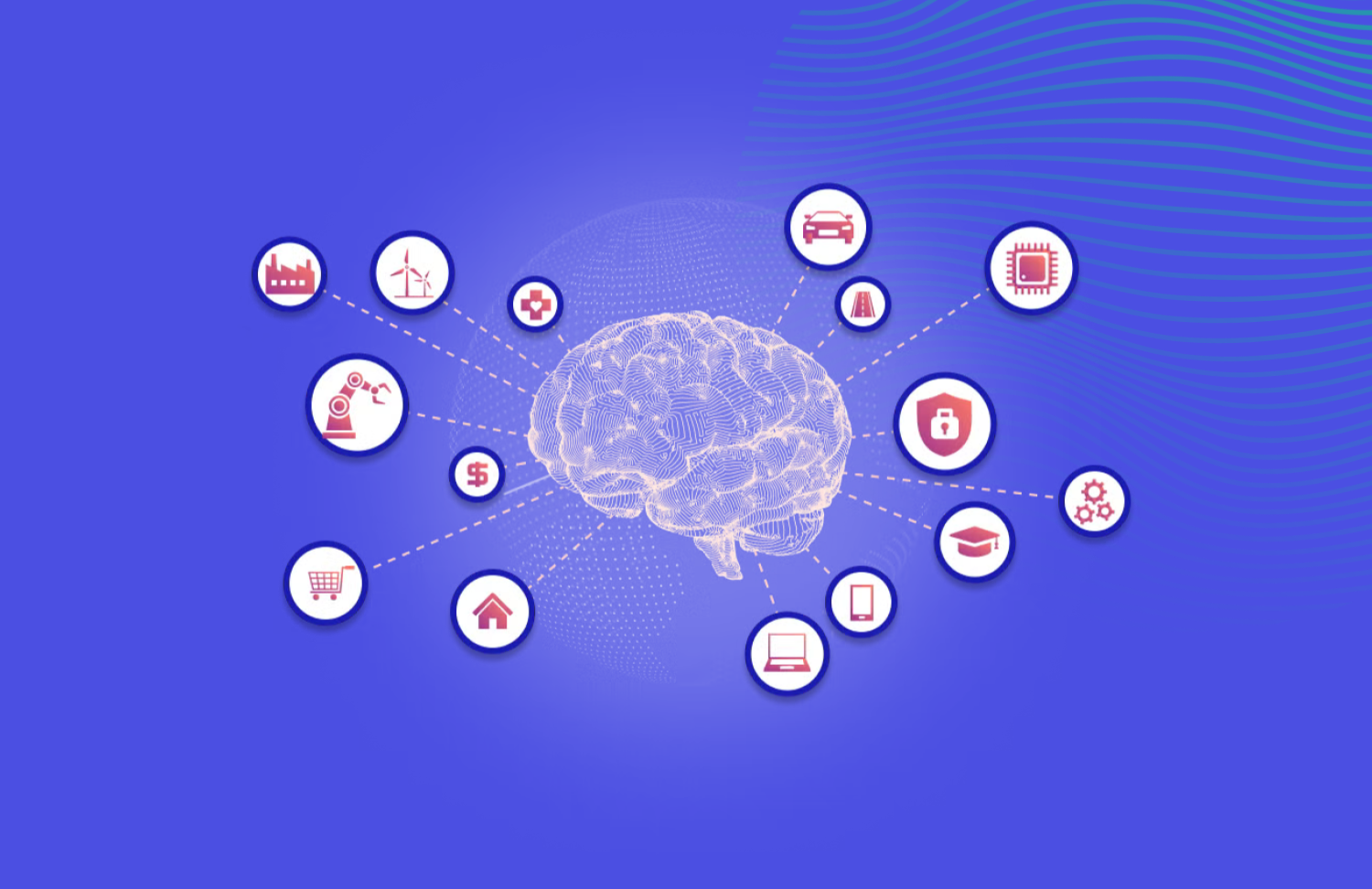
Integration Platform as a Service (iPaaS) enables enterprises to unify their data and applications so they can automate processes and accelerate agentic transformation through API-first architecture and low-code user experiences. A single unified platform drives innovation, lowers costs, and enhances security.
Today, it is typical for companies to manage as many as 360 software applications, many of which need to be integrated and automated in order to provide maximum value for business operations. A central integration platform can help reduce technology costs by $1.5M, and improve development efficiency by 65%.
As AI agents transform the landscape of business integration and automation, the need for composable and governed data flows is more important than ever.
How Does iPaaS Work?
iPaaS simplifies how organizations connect their applications, data, and systems, whether in the cloud, on-premises, or across hybrid environments. It provides a centralized platform to design, deploy, and manage integrations without heavy custom code or legacy middleware. Here are the features most iPaaS platforms offer that help reduce digital fragmentation:
Connect SaaS and On-Premises Applications
iPaaS enables secure batch or real-time data exchange between cloud and on-premises systems. It unifies SaaS apps, legacy infrastructure, and core platforms like CRM and ERP to eliminate silos and support business continuity.
Unify and Activate Enterprise Data
Activate data with centralized integration and governance that enables master data management within your enterprise platform. Data integration allows users to build low-code ELT pipelines that are built on a foundation of trust with golden records.
Centrally Manage APIs
Create, monitor, and govern all APIs from a single platform. Built-in API management simplifies access control, policy enforcement, and scaling across gateways without custom infrastructure.
Orchestrate Automations and Applications
Design low-code workflows that automate business processes across departments and systems. Boomi Enterprise Platform enables drag-and-drop orchestration of tasks like order processing, approvals, and app coordination.
Scale Securely Across the Enterprise
Support compliance, governance, and security from day one. With role-based access, monitoring, and policy management, Boomi helps IT reduce risk while accelerating transformation.
Transform Business Process With Agentic AI
As businesses enter the agentic era, the potential contained in connected data is waiting to be tapped. AI-ready iPaaS enables data integration and tools like an Agent Control Plane create the governance layer required for responsible AI activation.
What Are the Benefits of iPaaS?
iPaaS helps organizations move faster, reduce integration complexity, and unlock data visibility across the business. Here are some of the core benefits companies realize when adopting a modern integration platform.
- Composability for Secure, Repeatable Processes. Build and reuse integration templates, apps, APIs, and AI agents. Developers save time, reduce duplication, and maintain consistent experiences across systems.
- Empower Teams with Connected Data. Give teams secure, real-time access to the data they need across systems, functions, and environments. With centralized integration management, everyone stays aligned while IT retains control.
- Unified Governance and Access Control. By unifying tools like integration, API management, workflow automation, data pipelines, and AI Agents within a single platform, governance and access control for many functions can be managed from one central location.
- Enterprise Security. iPaaS built for enterprise will be able to provide secure, compliant services, so you can be sure your data is stored and managed in line with regulatory standards.
- Flexible deployment. Run your iPaaS in cloud and on-premises environments with hybrid runtime.
- Orchestrate with AI Agents and Low-Code Tools. By combining low-code design with AI-driven agents to streamline internal workflows, companies are able to achieve agentic transformation from internal chat tools to intelligent automation.
Modern iPaaS Features
The expected features of an iPaaS have evolved with the expectations of businesses looking to make the most of their software and data. While integration is still the foundation, these platform offerings have expanded to include automation, API management, data governance, and agentic capabilities:
Application Integration
Since application functionality can vary widely based on needs and priorities, the right iPaaS platform should support every integration approach: custom integrations for specific behaviors, and pre-built connectors for integrations that can be used out-of-the-box.
When an application connection is straightforward, a pre-built connector enables your IT team to ship functionality for internal teams with fast, reliable, and tested technology.
For more complex integration needs like connecting to an ERP with custom objects and fields, developers need to be able to customize connector behavior. Without the ability to customize, businesses are limited to only pre-defined activities and limit your integration efficacy.
Workflow Automation
The next functional extension of integrating applications is the ability to trigger actions based on integration activity like assigning new CRM leads to sales outreach sequences, or triggering invoice creation when a quote is accepted. Workflow automation within an iPaaS should offer low-code tools and reusable components that allow developers to easily build automated applications for business teams.
With the advent of AI, iPaaS platforms are adding agentic tools to the automation canvas so that users can combine deterministic and non-deterministic tools in their workflows.
Combining integration and automation with iPaaS can also provide advanced error handling, role-based access control, and activity monitoring to ensure that workflows operate in a governed environment.
API Management
APIs have become one of the core technologies for connected business. Modern enterprises need the ability to build, deploy, manage, and govern APIs across multiple gateways from one central, secure point of control. Without automated discovery and policy enforcement, API sprawl can create security risks that could lead to sensitive data leaks or cyberattacks.
API management goes beyond internal APIs, too: API products need to be monitored for usage and customer satisfaction, and third party APIs need to be governed for security and budget compliance.
The introduction of AI Agents to the modern workflow also means that MCP servers are becoming part of the enterprise monitoring surface. They share many traits with APIs, and require similar monitoring and enforcement practices.
Data Synchronization and Management
Integrating applications also requires integrating and managing data: establishing golden records as an established source of truth, and using ETL pipelines to ensure data moves between applications and data warehouses in the correct format for its destination.
With data residing in so many different formats and applications, synchronizing the right data to the right places is critical for forecasting to revenue recognition. Boomi’s Master Data Management and flexible data pipelines give enterprises clean, governed data for trusted analytics and the foundation for reliable AI.
Managed File Transfer
Modern enterprise requires businesses to share sensitive information with outside partners, and regulation requires that it be shared securely. Ensure high-volume and large size file transfers are delivered to the right recipient, and connect file transfers to automated workflows, simplifying operations while maintaining regulatory compliance.
For regulated industries and sensitive data, secure file transfer integration creates an audit trail and enables guaranteed delivery as well as scheduled and ad-hoc file transfer tools.
B2B / EDI
The need to synchronize data doesn’t just happen within your organization. For many businesses, operational bottlenecks appear when it comes to communicating with trading partners. By automating connections to trading partners, transactions happen quickly and accurately.
EDI data is often captured in legacy systems, and the ability to integrate that data and automate its movement provides better insight into business processes: onboard new partners smoothly, monitor transactions, and optimize hand-off processes.
AI Agent Connectivity & Management
AI Agents present major opportunities for business, providing intelligent automation for a broad range of functions. Boomi’s Agent Management capabilities give enterprises the visibility and control to govern AI Agents at scale: business users can build governed agents, connect to provisioned MCP servers using secure authentication, and include agents in workflows.
As the use of agents has proliferated, the need for centralized control and management has come both from a security and cost-management perspective: token consumption has become more expensive, and the ability to route agentic work to lower-cost models can help protect AI ROI.
End-to-End Orchestration
AI Agents are reshaping how enterprises design and execute end-to-end business processes. With agentic orchestration, users can describe an end-to-end process in natural language to design an agent-guided workflow that brings the necessary data and applications together in one single canvas.
Embedded Integration
Today’s application customers expect simple, out-of-the-box integration experiences. Provide your userbase with reliable integrations and generate new revenue streams by offering embedded integration. Unlike custom-built integration, embedded (sometimes called white label) integration doesn’t require significant developer and support time, since you’ve got an expert integration team taking care of the functionality.
Where to start when considering iPaaS implementation? The Connected Business Playbook offers a framework for starting with your core systems, evaluating your integration model, and best practices for maximizing your iPaaS value early.
iPaaS Use Cases
Manage Integrations Across Departments
With Boomi, GitHub is able to manage nearly 30 integrations, handling 50,000 invoices every day and automating finance, HR, and sales processes. Thanks to Boomi, GitHub’s sales team is better able to cross-sell and upsell deals by connecting Salesforce with customer usage data.
Modernize Legacy Systems and Accelerate M&A
Post Consumer Brands was able to align their stack of best-in-breed applications, modernize legacy applications, and master their data to establish “golden records” that act as a single source of truth across departments with Boomi. With API Management, they also built a repeatable process for post-acquisition integrations that could securely connect with applications and onboard new staff effectively.
B2B Vendor Onboarding for Real-Time Logistics
Crane Worldwide Logistics simplified vendor onboarding and integration while reducing data entry errors and providing faster processing time with real-time data when they modernized their systems to Boomi B2B/EDI Management.
Intellectual Property Protection
Securely store and manage files with detailed audit logs for compliance and monitoring to track unauthorized access. With Managed File Transfer, ACI Worldwide was able to simplify the software distribution process for their customers while safeguarding their IP.
Automate New-Hire Onboarding
By integrating their applications and HR data with Boomi, SPIE Nederland uses an internally-built AI Agent to execute an automated provisioning workflow for new hires, referencing employee data to provide the right access to each employee aligned with their role, resolving 60% of provisioning requests autonomously.
Automate Order-to-Cash
Emtec was able to reduce order entry time by 85% with intelligent workflow automation for its order-to-cash process. Thanks to Boomi’s pre-built SAP and Salesforce connectors, implementation was faster and more cost effective than building a custom solution.
Unified Customer Profiles
With Master Data Management, Lexitas built a 360-degree customer view, connecting customer activity data across 5 applications to enrich customer activity profiles and provide sales with deeper insight into cross-sell and upsell opportunities.
See more iPaaS Use Cases in our Customer Stories.
How Does iPaaS Compare to Other Integration Approaches?
From custom code to middleware and point-to-point scripts, businesses have long used a variety of approaches to connect systems and manage data. But how do these options compare in terms of flexibility, scalability, and maintenance? Here’s a side-by-side view of integration methods and how iPaaS stacks up.
iPaaS (Integration Platform as a Service)
Use Case
For broad enterprise integration across apps, data, and teams. iPaaS serves as a single point of integration for applications and data, enabling secure automation and enabling AI.
Benefits |
Challenges |
|
|
Direct API Integrations
Use Case
Direct API integrations built by internal developers to connect two applications.
Benefits |
Challenges |
|
|
Enterprise Service Bus (ESB)
Use Case
Middleware for routing and transforming messages between apps. ESB is commonly used to connect legacy systems with many service endpoints.
Benefits |
Challenges |
|
|
Custom Integration Solutions
Use Case
Bespoke code using internal dev frameworks and architectures. For unique requirements needing custom-built integrations.
Benefits |
Challenges |
|
|
Data Warehousing & ETL Tools
Use Case
Moves and transforms data into centralized repositories, which can be consolidated for dashboards and analytics.
Benefits |
Challenges |
|
|
Cloud Data Integration Tools
Use Case
For syncing cloud data across SaaS apps and transfer data to warehouses.
Benefits |
Challenges |
|
|
Middleware Solutions
Use Case
Legacy integration software for on-premises systems.
Benefits |
Challenges |
|
|
Serverless & Microservices
Use Case
Event-driven micro-integrations using modern cloud architectures.
Benefits |
Challenges |
|
|
Workflow Automation Tools
Use Case
For light, departmental automations without code. These tools allow for defining triggers and actions between web apps.
Benefits |
Challenges |
|
|
iPaaS FAQs
What is iPaaS?
iPaaS stands for Integration Platform as a Service: a cloud-based approach to connecting apps, systems, and data across your tech stack. Instead of building custom connections from scratch, iPaaS gives you a centralized, low-code platform to design, automate, and manage integrations at scale.
How is iPaaS different from ESB or middleware?
ESBs were built for older, on-premises architectures and tend to rely on heavyweight setup, XML mapping, and rigid message brokers. iPaaS is lighter, cloud-native, and designed for today’s hybrid environments. It removes much of the infrastructure burden and allows faster delivery using prebuilt components and visual logic.
Is iPaaS only for large enterprises?
No. iPaaS is flexible enough for companies of all sizes. It’s used by lean IT teams at high-growth startups and by global enterprises running hundreds of systems. With the rise of SaaS apps and hybrid stacks, integration is a universal need, especially with the rise of agentic AI.
What types of integrations can I build with iPaaS?
iPaaS supports app-to-app, API-based, database, B2B, and event-driven integrations. You can connect CRMs, ERPs, finance systems, HR tools, data warehouses, and more, orchestrating agentic workflows and building data pipelines.
Does iPaaS support real-time data integration?
Yes. Many platforms support both real-time and scheduled integrations. Real-time or event-based means data can sync instantly between systems when something happens — like when a new order is placed or a record is updated.
How long does it take to implement iPaaS?
Most teams can get their first integrations running in days, not months. With prebuilt connectors, visual tools, and reusable logic, you skip the boilerplate and go straight to solving business problems.
Is iPaaS secure and compliant?
Security is always important for an iPaaS platform, but the level of security depends on the provider. Boomi supports enterprise security standards like SOC 2, HIPAA, GDPR, and more. You can set role-based access, manage audit logs, and govern integrations centrally.
Do I need developers to use iPaaS?
Most platforms are built with low-code or no-code functionality so non-developers can create workflows. But most Enterprise companies need to go beyond out-of-the-box options. With custom integration, developers can still go deeper when needed to add logic, extensions, or scripting where appropriate. Business users can automate tasks visually, while developers can extend functionality as needed.
How much training is needed to implement Boomi?
Boomi’s free training programs have been highlighted as a top benefit by G2 reviewers. Once you’re up and running, the thousands of members in the Boomi Community add another layer of support and product knowledge.
Can iPaaS handle hybrid environments (cloud + on-premises)?
Yes. A good iPaaS supports both cloud and on-premises systems with flexible deployment options that let you run integrations where your data lives. With Boomi, you can deploy integrations in the cloud, on premises, or edge without patching together VPNs or middleware.
Why choose Boomi as an iPaaS provider?
Boomi helps teams move fast without compromising control. With 300+ connectors, ready-to-use Platform Agents and 30,000+ customers, we bring scale and simplicity together. It’s simple enough to start fast, and powerful enough to support complex enterprise environments.
With Boomi, you can deploy integrations in the cloud, on premises, or edge without patching together VPNs or middleware.
Why Choose Boomi Enterprise Platform?
There are many iPaaS providers, but Boomi stands apart. Here’s why more than 30,000 organizations choose Boomi to simplify their integrations, accelerate transformation, and scale securely across their tech ecosystems.
- Boomi’s drag-and-drop UI lets developers and business users collaborate without relying on custom code.
- With 1,500+ prebuilt connectors and AI agents in the Marketplace, Boomi accelerates time-to-value and simplifies system expansion as your business grows.
- Enterprise-grade governance allows you to enforce security policies, manage APIs, and stay compliant with confidence. Boomi provides centralized control and built-in tools to help meet data privacy and security requirements.
- Our platform is built for hybrid environments. Boomi’s flexible runtime connects on-premises, cloud, and edge systems in one platform, supporting complex hybrid IT architectures with flexibility and scale.
- Leading companies in healthcare, finance, retail, and beyond rely on Boomi to run critical integrations. From startups to Fortune 100s, we have helped 30,000+ businesses grow with agility.
- Boomi is recognized as a leader in integration by leading analysts and thousands of customers. We’ve helped organizations of all sizes modernize fast without compromising security or governance.
See why Boomi was named a Leader in the 2026 Gartner® Magic Quadrant™ for Integration Platform as a Service.