












How It Works
Build a foundation of trusted data for analytics and AI agents, with autonomous monitoring, AI-driven fixes, and health context built for agents.
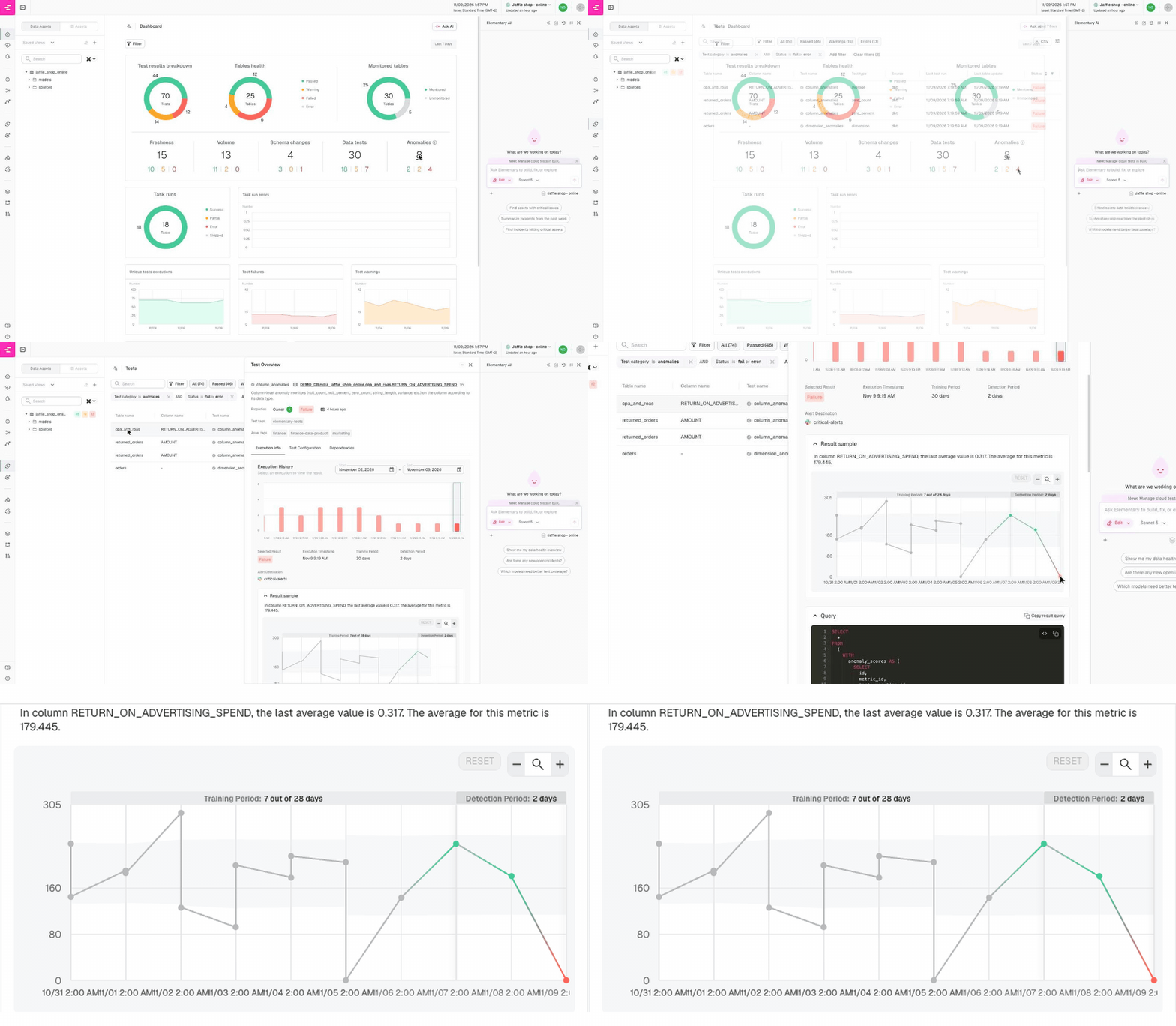
Monitor Data Quality Autonomously
Catch late, missing, and anomalous data with ML monitors that work out of the box, plus quality gates that stop breaking changes before they reach dashboards and agents. Let AI agents find coverage gaps and recommend tests for your team to approve.
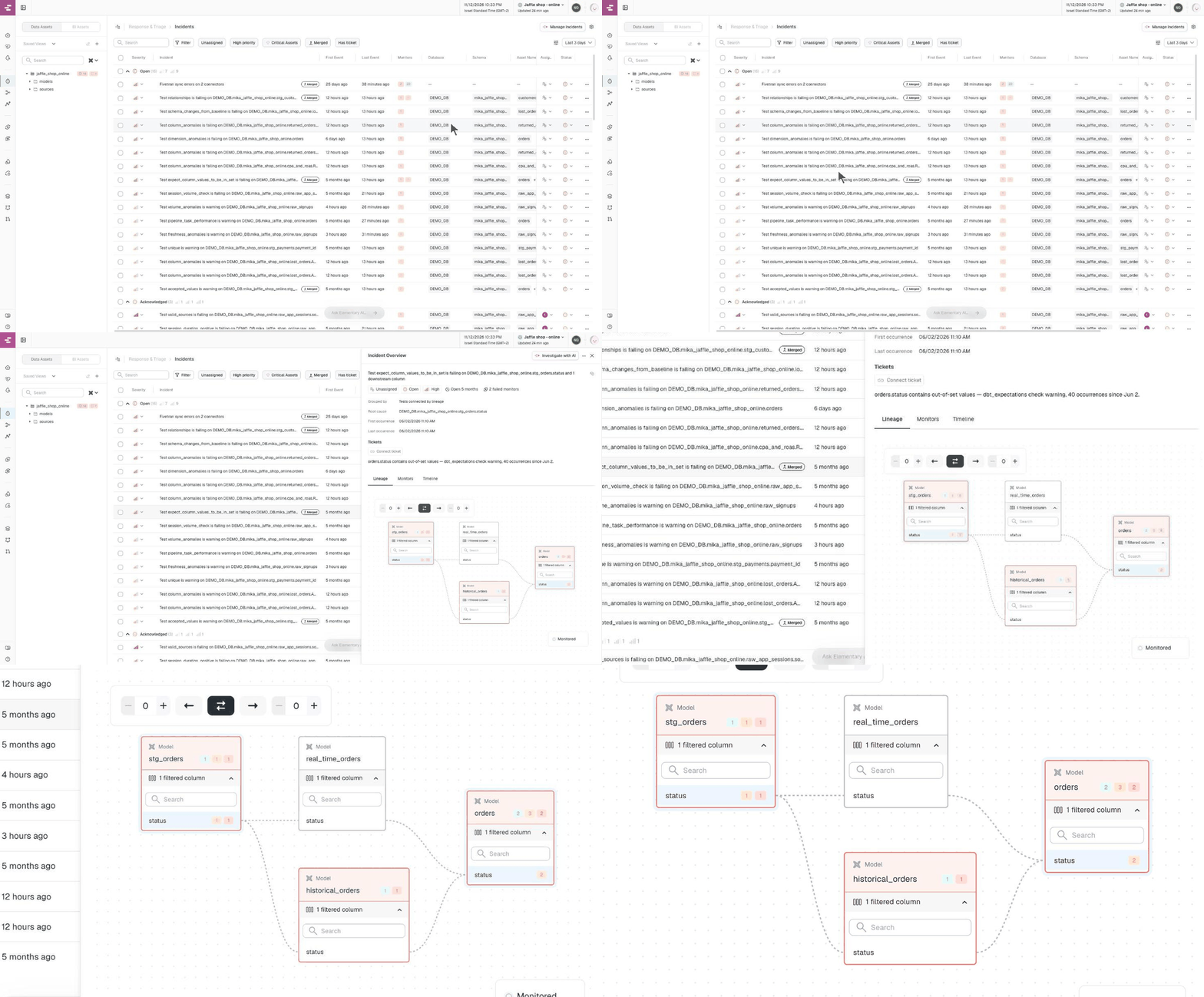
Resolve Data Issues Faster
Group related failures into one incident with a single root cause, traced to the source with column-level lineage and routed to the right owner. Let AI investigate, propose a code fix, and open a pull request for your team to review.
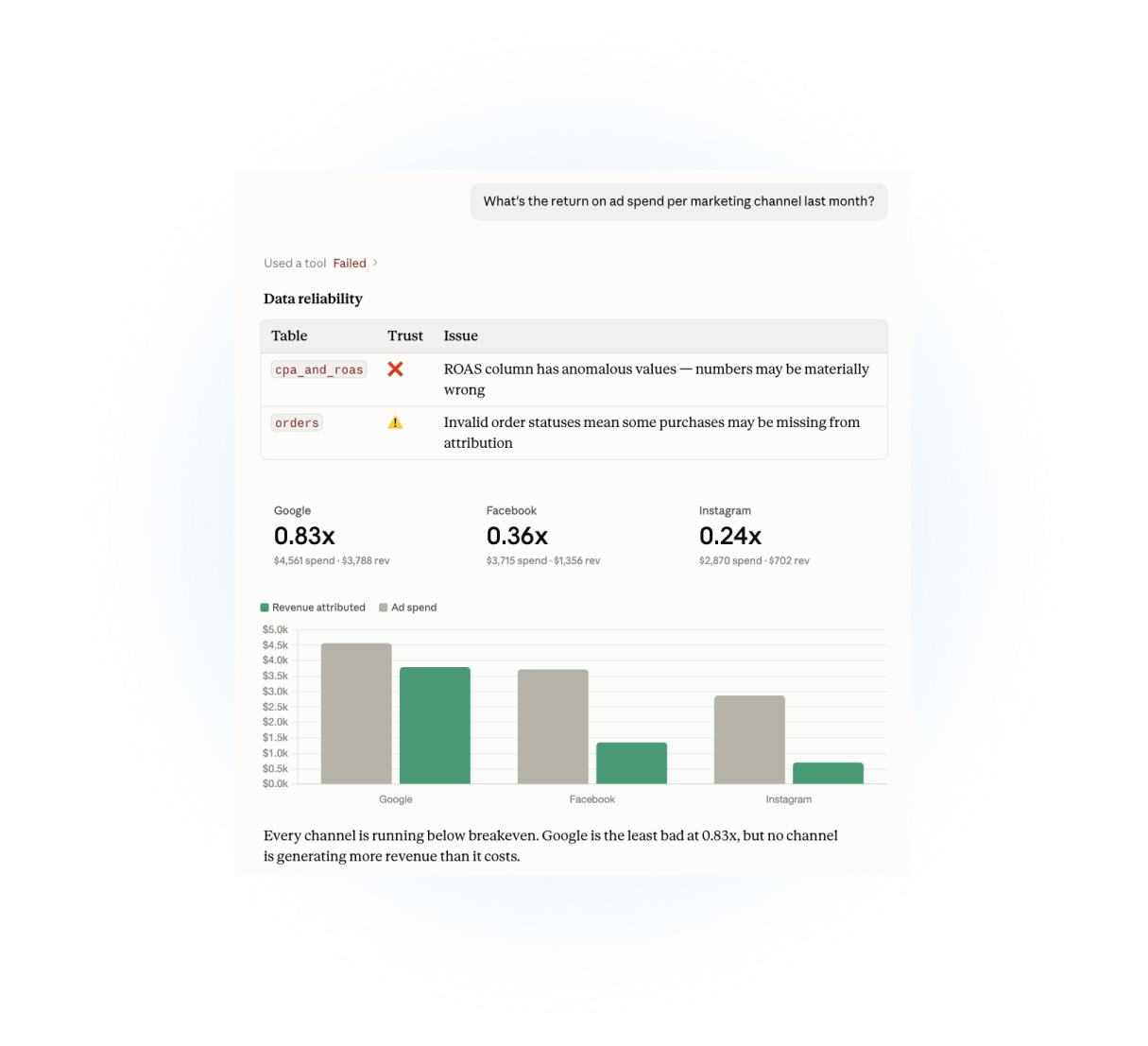
Tell Agents Which Data to Trust
Give any MCP client live access to lineage, tests, and incidents, so agents and the people using them can see when an answer relies on data with known issues. Run agents on pre-modeled context instead of rebuilding it for every request, cutting token cost.
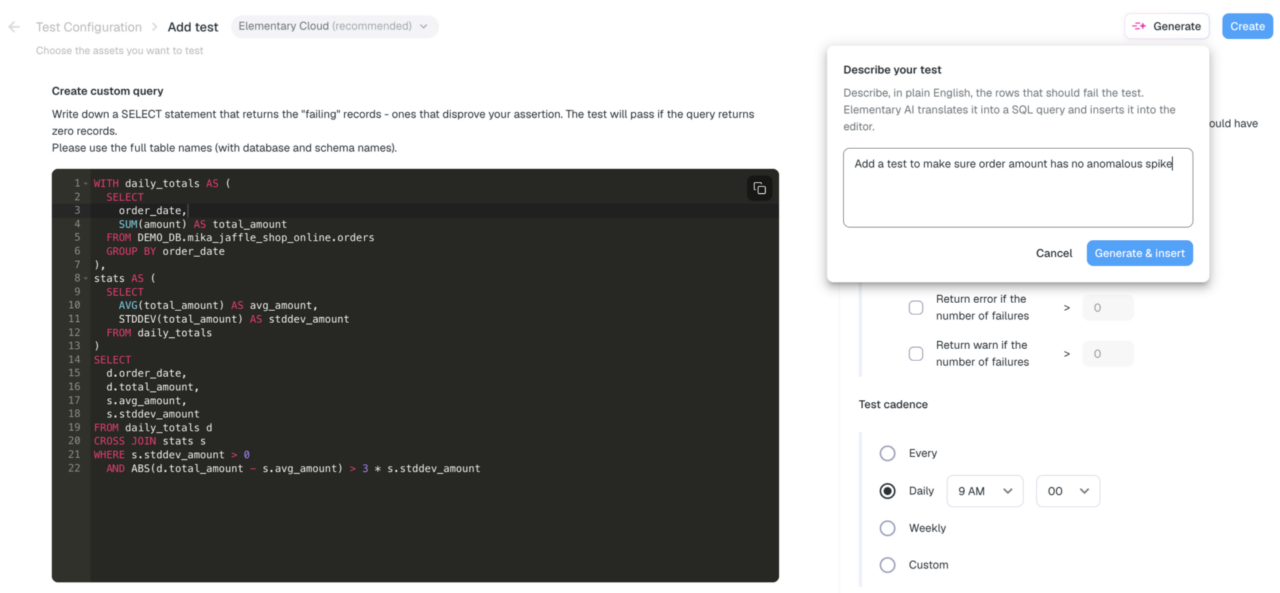
Democratize Data Reliability For Every Team
Data engineers manage tests as code and keep control of changes and approvals. Business users add validations with no code. Both see data health and get alerted to incidents that affect the data they rely on.
Elementary Data Features
Anomaly Detection
Catch late, missing, and anomalous data with ML monitors for freshness, volume, and column metrics that work out of the box.
AI Test Coverage
Find untested assets and get recommended tests based on how your data is used, for your team to approve.
In-Pipeline Tests
Run checks inside dbt and Python pipelines, so issues are caught before data moves on.
Source and BI Integrations
Connect warehouses, BI tools, and pipelines across your entire data estate for one view of data health.
Column-Level Lineage
Trace columns across transformations to the root cause and every downstream asset affected.
AI Triage and Resolution
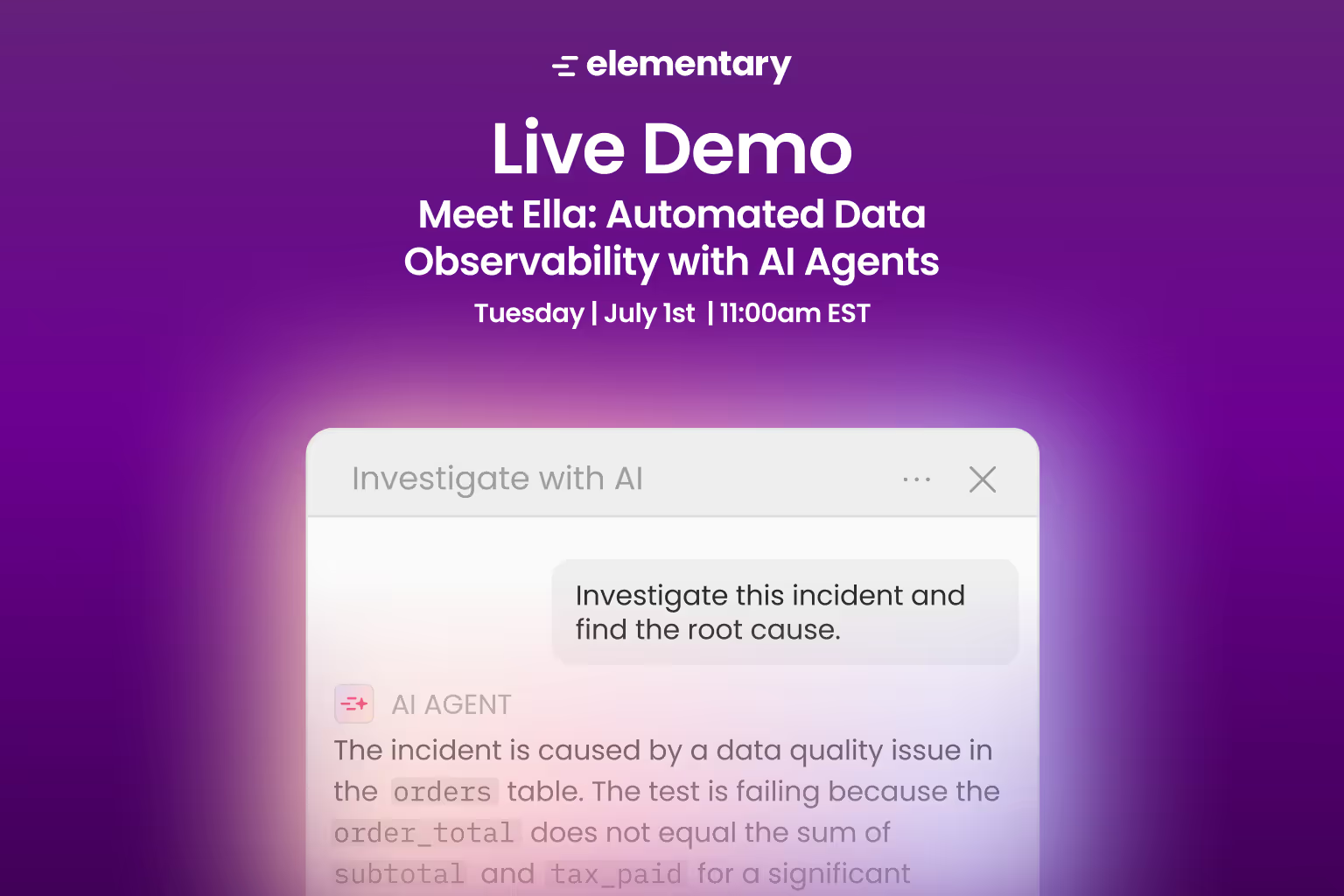
Autonomously investigate root cause, assess impact, and propose a fix as a pull request for your team to review.
Alerting and Ticketing
Open one incident per problem and route it to the right owner in Slack, PagerDuty, and Jira.
MCP Server
Let any MCP client query lineage, assets, and open incidents, powered by the same agent context and harness.
Data Health Scores
Measure data health by domain, team, and asset. Data quality analysis shows where to prioritize fixes.
What Our Customers Are Saying



Elementary Data Resources

Frequently Asked Questions
Data observability monitors the health of your data and pipelines. It detects stale, missing, or anomalous data and helps teams find the cause and fix it before downstream consumers are affected.
It uses machine learning to spot unexpected changes, such as a drop in row count or a table that stops updating. Elementary Data learns what normal looks like for each asset and flags deviations early.
Yes. Business users can create tests with no code, track health scores, and receive alerts, while engineers review changes through pull requests.
Core monitoring works with metadata, logs, and test results, without access to raw data. For deeper checks and AI investigations, Elementary Runtime runs supported tasks inside your environment.
Elementary Data uses a proprietary agent context and harness built for lineage and metadata. Agents start with the context they need instead of building it from scratch, so they use fewer tokens than a custom context model on generic frontier models.
Elementary Data exposes lineage, tests, incidents, and health scores to any AI tool through MCP. Before acting, an agent can check whether data is healthy, who owns it, and what it affects.
Elementary combines ML-based anomaly detection for freshness and volume with checks that run in your pipelines, such as dbt or Python tests. AI agents identify gaps and extend coverage based on how your data is used.
dbt is optional. If you use it, Elementary integrates natively through its open-source dbt package, and changes made in the UI sync back to code.
Elementary Data integrates natively with dbt Core and dbt Cloud, connects to warehouses such as Snowflake and Databricks, and extends column-level lineage to BI tools like Sigma and Looker. It opens pull requests in GitHub and routes alerts to Slack, Jira, and more.
Related failures group into one incident with one alert, sent only to the people who own or subscribe to the affected assets. Incidents resolve automatically when tests pass.
Agents are opt-in and run on self-hosted models, so nothing is shared with external services. Every change goes through a pull request your team approves.