























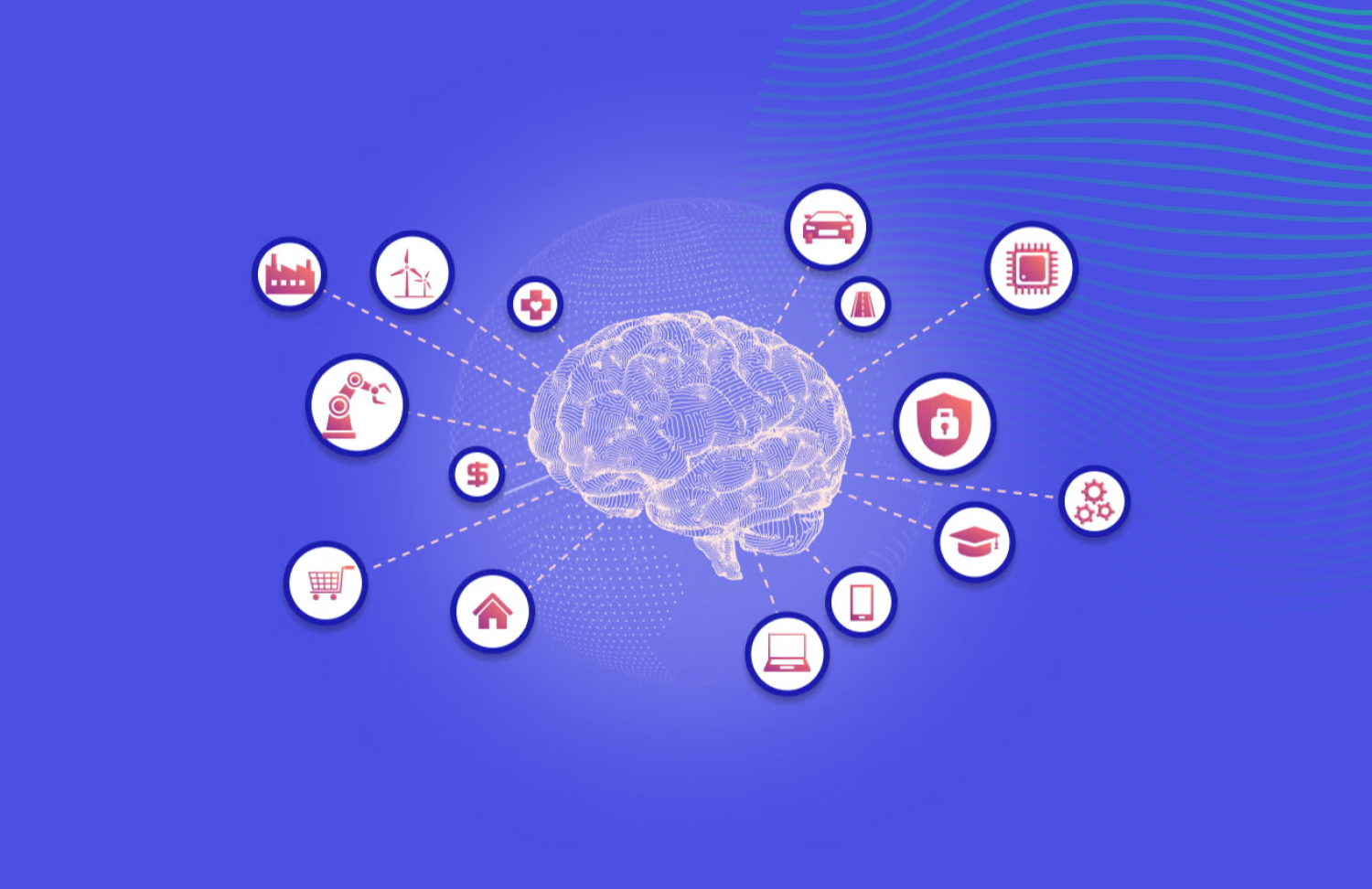
Integration Platform as a Service (iPaaS) enables enterprises to unify their data and applications so they can automate processes and accelerate agentic transformation through API-first architecture and low-code user experiences. A single unified platform drives innovation, lowers costs, and enhances security.
As AI agents transform the landscape of business integration and automation, the need for composable and governed data flows is more important than ever.
How Does iPaaS Work?
iPaaS simplifies how organizations connect their applications, data, and systems, whether in the cloud, on-premises, or across hybrid environments. It provides a centralized platform to design, deploy, and manage integrations without heavy custom code or legacy middleware. Here are the tools most iPaaS platforms offer that help reduce digital fragmentation:
Connect SaaS and On-Premises Applications
iPaaS enables secure batch or real-time data exchange between cloud and on-premises systems. It unifies SaaS apps, legacy infrastructure, and core platforms like CRM and ERP to eliminate silos and support business continuity.
Unify and Activate Enterprise Data
Activate data with centralized integration and governance that enables master data management within your enterprise platform. Data integration allows users to build low-code ELT pipelines that are built on a foundation of trust with golden records.
Centrally Manage APIs
Create, monitor, and govern all APIs from a single platform. Built-in API management simplifies access control, policy enforcement, and scaling across gateways without custom infrastructure.
Orchestrate Automations and Applications
Design low-code workflows that automate business processes across departments and systems. Boomi Enterprise Platform enables drag-and-drop orchestration of tasks like order processing, approvals, and app coordination.
Scale Securely Across the Enterprise
Support compliance, governance, and security from day one. With role-based access, monitoring, and policy management, Boomi helps IT reduce risk while accelerating transformation.
Transform Business Process With Agentic AI
As businesses enter the agentic era, the potential contained in connected data is waiting to be tapped. AI-ready iPaaS enables data integration and tools like Agentstudio create the governance layer required for responsible AI activation.
What Are the Benefits of iPaaS?
iPaaS helps organizations move faster, reduce integration complexity, and unlock data visibility across the business. Here are some of the core benefits companies realize when adopting a modern integration platform.
- Composability for Secure, Repeatable Processes. Build and reuse integration templates, apps, APIs, and AI agents. Developers save time, reduce duplication, and maintain consistent experiences across systems.
- Empower Teams with Connected Data. Give teams secure, real-time access to the data they need across systems, functions, and environments. With centralized integration management, everyone stays aligned while IT retains control.
- Orchestrate with AI Agents and Low-Code Tools. By combining low-code design with AI-driven agents to streamline internal workflows, companies are able to achieve agentic transformation from internal chat tools to intelligent automation.
How Does iPaaS Compare to Other Integration Approaches?
From custom code to middleware and point-to-point scripts, businesses have long used a variety of approaches to connect systems and manage data. But how do these options compare in terms of flexibility, scalability, and maintenance? Here’s a side-by-side view of integration methods and how iPaaS stacks up.
iPaaS (Integration Platform as a Service)
Use Case
For broad enterprise integration across apps, data, and teams. iPaaS serves as a single point of integration for applications and data, enabling secure automation and enabling AI.
Benefits |
Challenges |
|
|
Direct API Integrations
Use Case
Direct API integrations built by internal developers to connect two applications.
Benefits |
Challenges |
|
|
Enterprise Service Bus (ESB)
Use Case
Middleware for routing and transforming messages between apps. ESB is commonly used to connect legacy systems with many service endpoints.
Benefits |
Challenges |
|
|
Custom Integration Solutions
Use Case
Bespoke code using internal dev frameworks and architectures. For unique requirements needing custom-built integrations.
Benefits |
Challenges |
|
|
Data Warehousing & ETL Tools
Use Case
Moves and transforms data into centralized repositories, which can be consolidated for dashboards and analytics.
Benefits |
Challenges |
|
|
Cloud Data Integration Tools
Use Case
For syncing cloud data across SaaS apps and transfer data to warehouses.
Benefits |
Challenges |
|
|
Middleware Solutions
Use Case
Legacy integration software for on-premises systems.
Benefits |
Challenges |
|
|
Serverless & Microservices
Use Case
Event-driven micro-integrations using modern cloud architectures.
Benefits |
Challenges |
|
|
Workflow Automation Tools
Use Case
For light, departmental automations without code. These tools allow for defining triggers and actions between web apps.
Benefits |
Challenges |
|
|
iPaaS FAQs
What is iPaaS?
iPaaS stands for Integration Platform as a Service: a cloud-based approach to connecting apps, systems, and data across your tech stack. Instead of building custom connections from scratch, iPaaS gives you a centralized, low-code platform to design, automate, and manage integrations at scale.
How is iPaaS different from ESB or middleware?
ESBs were built for older, on-premises architectures and tend to rely on heavyweight setup, XML mapping, and rigid message brokers. iPaaS is lighter, cloud-native, and designed for today’s hybrid environments. It removes much of the infrastructure burden and allows faster delivery using prebuilt components and visual logic.
Is iPaaS only for large enterprises?
No. iPaaS is flexible enough for companies of all sizes. It’s used by lean IT teams at high-growth startups and by global enterprises running hundreds of systems. With the rise of SaaS apps and hybrid stacks, integration is a universal need, especially with the rise of agentic AI.
What types of integrations can I build with iPaaS?
iPaaS supports app-to-app, API-based, database, B2B, and event-driven integrations. You can connect CRMs, ERPs, finance systems, HR tools, data warehouses, and more, orchestrating agentic workflows and building data pipelines.
Does iPaaS support real-time data integration?
Yes. Many platforms support both real-time and scheduled integrations. Real-time or event-based means data can sync instantly between systems when something happens — like when a new order is placed or a record is updated.
How long does it take to implement iPaaS?
Most teams can get their first integrations running in days, not months. With prebuilt connectors, visual tools, and reusable logic, you skip the boilerplate and go straight to solving business problems.
Is iPaaS secure and compliant?
Security is always important for an iPaaS platform, but the level of security depends on the provider. Boomi supports enterprise security standards like SOC 2, HIPAA, GDPR, and more. You can set role-based access, manage audit logs, and govern integrations centrally.
Do I need developers to use iPaaS?
Most platforms are built with low-code or no-code functionality so non-developers can create workflows. But most Enterprise companies need to go beyond out-of-the-box options. With custom integration, developers can still go deeper when needed to add logic, extensions, or scripting where appropriate. Business users can automate tasks visually, while developers can extend functionality as needed.
How much training is needed to implement Boomi?
Boomi’s free training programs have been highlighted as a top benefit by G2 reviewers. Once you’re up and running, the thousands of members in the Boomi Community add another layer of support and product knowledge.
Can iPaaS handle hybrid environments (cloud + on-premises)?
Yes. A good iPaaS supports both cloud and on-premises systems with flexible deployment options that let you run integrations where your data lives. With Boomi, you can deploy integrations in the cloud, on premises, or edge without patching together VPNs or middleware.
Why choose Boomi as an iPaaS provider?
Boomi helps teams move fast without compromising control. With 300+ connectors, ready-to-use Platform Agents and 30,000+ customers, we bring scale and simplicity together. It’s simple enough to start fast, and powerful enough to support complex enterprise environments.
With Boomi, you can deploy integrations in the cloud, on premises, or edge without patching together VPNs or middleware.
Why choose Boomi as an iPaaS provider?
Boomi helps teams move fast without compromising control. With 300+ connectors, ready-to-use Platform Agents and 30,000+ customers, we bring scale and simplicity together. It’s simple enough to start fast, and powerful enough to support complex enterprise environments.
Why Choose Boomi Enterprise Platform?
There are many iPaaS providers, but Boomi stands apart. Here’s why more than 30,000 organizations choose Boomi to simplify their integrations, accelerate transformation, and scale securely across their tech ecosystems.
- Boomi’s drag-and-drop UI lets developers and business users collaborate without relying on custom code.
- With 1,500+ prebuilt connectors and AI agents in the Marketplace, Boomi accelerates time-to-value and simplifies system expansion as your business grows.
- Enterprise-grade governance allows you to enforce security policies, manage APIs, and stay compliant with confidence. Boomi provides centralized control and built-in tools to help meet data privacy and security requirements.
- Our platform is built for hybrid environments. Boomi’s flexible runtime connects on-premises, cloud, and edge systems in one platform, supporting complex hybrid IT architectures with flexibility and scale.
- Leading companies in healthcare, finance, retail, and beyond rely on Boomi to run critical integrations. From startups to Fortune 100s, we have helped 30,000+ businesses grow with agility.
- Boomi is recognized as a leader in integration by leading analysts and thousands of customers. We’ve helped organizations of all sizes modernize fast without compromising security or governance.
Without a central governance and control layer, integration and API sprawl can create data conflicts, unpredictable automation, and impede your ability to take advantage of agentic AI. Learn more with a free trial.